
Hendry ICE Release Handoff
Hendry's official 2019 Warrant Service Officer memorandum is expressly release-triggered. It says ICE assumes custody only after release from HCSO criminal custody. Appendix A describes holding a designated person for transfer, ordinarily no more than 48 hours under that authority unless another reimbursable agreement applies. This creates a local reason that Custody Status: OUT cannot be translated automatically as went home.
The county and federal systems describe different events. HCSO records when its criminal custody ended and may hold the release disposition or public transfer notation. ICE records the later civil immigration custody. A person can therefore be accurately out of Hendry County Jail while still confined elsewhere. Immigration detention is civil custody, not a criminal sentence and not proof of guilt.
| Event | Confirm with |
|---|---|
| HCSO custody ended | HCSO OUT status and release record |
| ICE took custody | ODLS, reporting line, or receiving facility |
| Transfer destination | HCSO transfer notation and ICE facility directory |
| Community release | Current ICE status plus originating records |
Search Hendry ICE Custody
Use the ICE Online Detainee Locator System, commonly called ODLS. One route searches by the nine-digit A-number and country of birth. The other uses exact name, date of birth, and country of birth. An A-number may need a leading zero to reach nine digits. Enter the supported identity details exactly and compare the match before relying on it.
Recent bookings, people under 18, and certain custody situations may not display. A missing result is not proof of release. Spelling, name order, data timing, identity fields, transfer stage, or limits on public display can affect the search. Use the ICE Detention Reporting and Information Line when ODLS does not resolve the location.
- Get the exact name, date of birth, country of birth, and A-number if lawfully available.
- Search ODLS by A-number or biographical details.
- Confirm the displayed identity and facility information.
- Call the reporting line when a fresh transfer does not appear.
- Request the HCSO release and transfer record to prove the county handoff.
Important: Disappearance from ODLS alone does not prove release into the community.
ICE Locator Release Coverage
The official ICE locator coverage explanation describes post-release visibility and attorney information resources.
The federal source helps interpret recent locator results, but it does not replace HCSO's exact local release time or transfer disposition.
- A-number
- The immigration identifier used with country of birth in one ODLS search path.
- Detainer
- An agency request or legal custody interest connected to a handoff.
- Transfer hold
- The limited post-local-release period described in the Hendry memorandum for transfer.
- ODLS
- ICE's public Online Detainee Locator System.
Save the date and time of each search. Dynamic custody tools report a point in time. If the precise custody sequence matters, collect the HCSO release record, the ICE locator result, and any receiving-facility confirmation rather than relying on one screen.
ICE Facilities Outside Hendry
No separate ICE detention building was identified inside Hendry County. The ICE detention-facility directory lists the federal network and contact information for a facility named in a locator result.
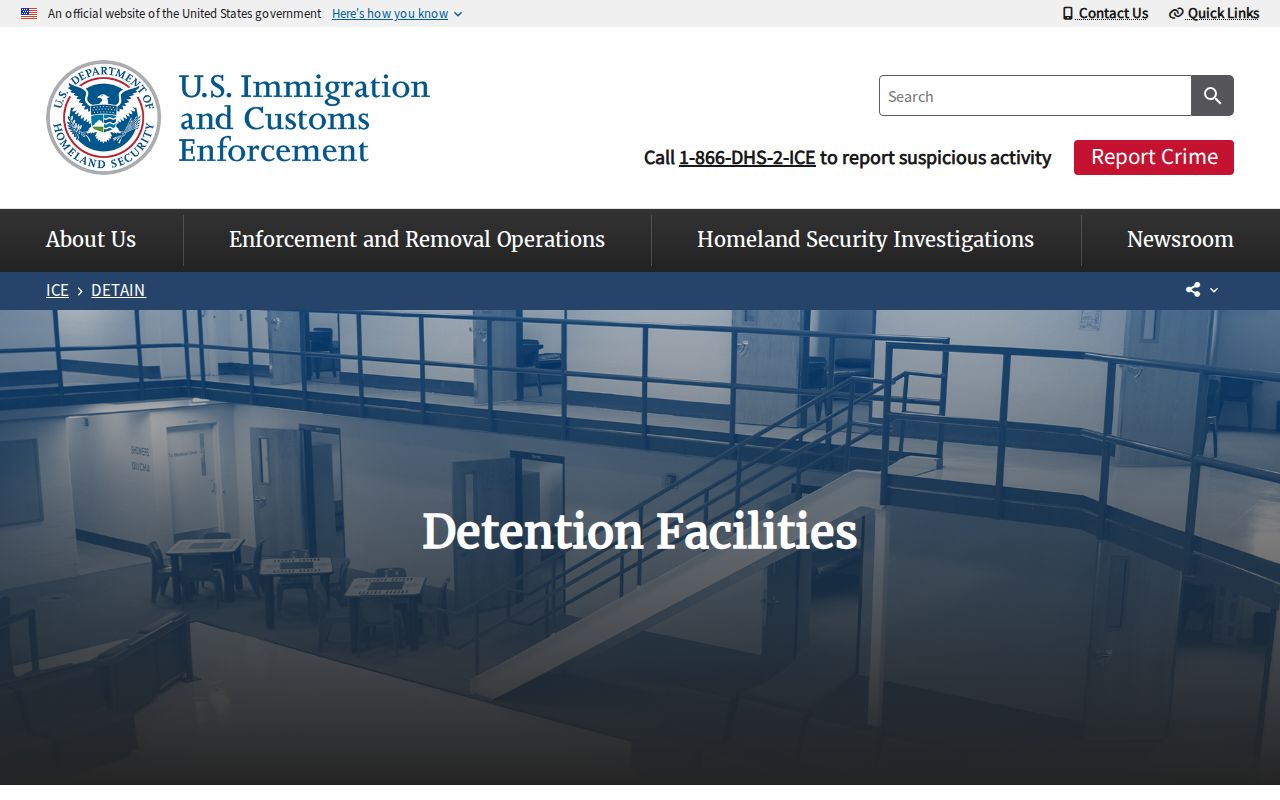
The directory is a destination tool. It must not be displayed as though every listed site serves each Hendry transfer.
Nearby Glades County Detention Center is in Moore Haven, Glades County. It is not a Hendry County facility merely because a transfer might go there. Name that location only when ODLS, HCSO, ICE, or another official record points to it. The same rule applies to any distant detention center. The receiving record controls, not geographic guesswork.
Research notes that current Hendry administrative check-in coverage routes to Miami or Miramar, but anyone planning travel should verify before leaving. Administrative reporting and detention custody are also distinct functions.
Hendry ICE Transfer Records
Ask HCSO for the jail release or custody-movement record when its public detail shows OUT but does not name the destination. Include the full name, HCSO inmate ID, and booked date. Request the actual date and time local custody ended, recorded release disposition, public receiving-agency notation, and detainer notation subject to lawful disclosure. HCSO's GovQA portal is the published electronic path.
For federal immigration records, ICE has a separate FOIA office. Identify the A-number and the specific custody, transfer, or release record sought. Access and redaction depend on federal law and the requester's authority. Do not send an immigration request to FDC or assume the Hendry Clerk holds the federal movement record.
ICE Custody Information
Online Detainee Locator System
1-888-351-4024
Operators: Monday through Friday, excluding holidays
8 a.m. to 8 p.m. Eastern
Language assistance is available.
For HCSO's side, call (863) 674-5600 or use the public-record gateway. Confirm each agency's time and exact status.
Hendry Release Versus Transfer
The word release can be agency-specific. Under the memorandum, HCSO releases the person from local criminal custody before ICE assumes federal civil custody. Both statements can be true without the person entering the community. A clear record summary should say that HCSO custody ended, then identify whether ICE custody began.
A court docket can explain why local criminal custody ended, but it does not necessarily record the physical handoff time. HCSO controls that movement record. ICE controls the next custody record. The Hendry County released-person search path adds the Clerk and VINELink checks when the original local case also needs review.
Do not call an ICE transfer a state-prison commitment, a county sentence, or a conviction. If ODLS later stops showing the person, use the reporting line and records process. The last visible record should not be stretched beyond what it states.
Hendry ICE Identity Checks
Small identity errors can hide a result. Use the full legal name, precise date of birth, country of birth, and A-number when available. Do not merge an HCSO record and an ODLS result merely because names are similar. The HCSO inmate ID identifies the county entry, while the A-number identifies the immigration record.
Minors and some recent or special custody situations may not be displayed in ODLS. Confidentiality and access rules can also limit documents. When a public search does not return a match, the accurate statement is no public result found under that query. Follow with the reporting line or authorized records request.
Remember: Confirm local release, federal intake, current location, and later ICE release as separate events.
Hendry ICE Record Boundaries
ICE and BOP searches are not interchangeable. BOP covers federal criminal sentences after designation, ODLS covers civil immigration detention, and USMS can handle federal criminal pretrial custody. A county transfer record may identify which agency received the person. Use that agency's terms rather than calling every federal handoff an ICE detention or prison release.
The Hendry memorandum supplies a narrow transfer framework. Its purpose is custodial transfer at scheduled release from HCSO criminal custody, and its limited hold language should not become a rule for every person or later facility. Ask whether the specific release record contains a receiving-agency notation. Then confirm actual intake with ICE. The agreement describes authority and process, not proof that a named person was transferred.
ODLS is a location tool, not a certified release report. It may not state the exact moment HCSO custody ended, the local court authority, or each movement between facilities. Obtain each piece from its creator. HCSO controls its movement record, the Clerk controls the case record, and ICE controls federal detention records.
When calling, have the exact name, A-number if known, date of birth, country of birth, last known facility, and transfer date ready. Disclosure can be limited, but precise identifiers reduce confusion. Language help is available during the published operating window. Verify current hours because contact schedules can change.
A later ICE release is another event. Do not infer it because a person no longer appears. Call the reporting line, consult an authorized representative where appropriate, or seek the relevant ICE record. A full sequence may contain HCSO out, ICE intake, ICE transfer, and later ICE release, each with its own source and time.
The Hendry docket can explain the local case even though it does not control immigration detention. It may show the bond, dismissal, sentence, or order that ended the county hold. Pair that order with the HCSO movement record and ICE result. This three-source method avoids treating a local legal release as if it also resolved federal civil custody.
Build the local side from the HCSO inmate search, the HCSO records gateway, and the Hendry Clerk records gateway. They supply the county status, transfer report route, and local court order. ICE controls the next federal event.