
Former Hendry Prison Status
Hendry Correctional Institution closed in the state's 2012 closure round after its population was moved. It is absent from the current Florida Department of Corrections institution directory. That absence is not a gap to fill with an old address or telephone number. The former institution is historical and must not be presented as an operating prison, county jail, or release desk.
The useful path is person-based. FDC assigns a six-character DC number that follows the offender record across institutions. A former prisoner may have moved elsewhere before release, entered community supervision, or completed the sentence. Search the statewide network by DC number or name, then read the incarceration and release history. The old institution name is a clue, not the current custodian.
| Question | Correct route |
|---|---|
| Was a former prisoner released? | FDC release search and incarceration history |
| Where is the person now? | Current FDC status or named custodian |
| Can the old institution confirm release? | No, use FDC Central Records |
| Was someone released from Hendry County Jail? | HCSO, not the former prison |
Search Former Hendry Releases
Begin at the FDC search menu. Choose Inmate Release Information Search for a past or scheduled prison release, or the broader offender entry when active supervision or historical status may matter. Use the DC number if known. Name fields support beginning-of-name matching and alias searching, so open each possible match and verify the identifier.
Read date labels literally. Release Date in a released-person record is historical. Current Release Date on an active-inmate detail is a changeable projection, called a tentative release date by Florida law. A future entry in the release database is scheduled information, not proof that release occurred. After the event, verify the out history, actual date, and current status.
- Search statewide rather than by the closed institution.
- Match the DC number and committed name.
- Read incarceration history for the Hendry institution entry.
- Separate a projected date from an actual release date.
- Review supervision information for legal control after prison exit.
- Request Central Records when the public detail is incomplete.
Important: A closed prison name does not identify a current facility or a current custodian.
Hendry Closure Directory Evidence
The current FDC institution directory is the official check for operating state prisons.
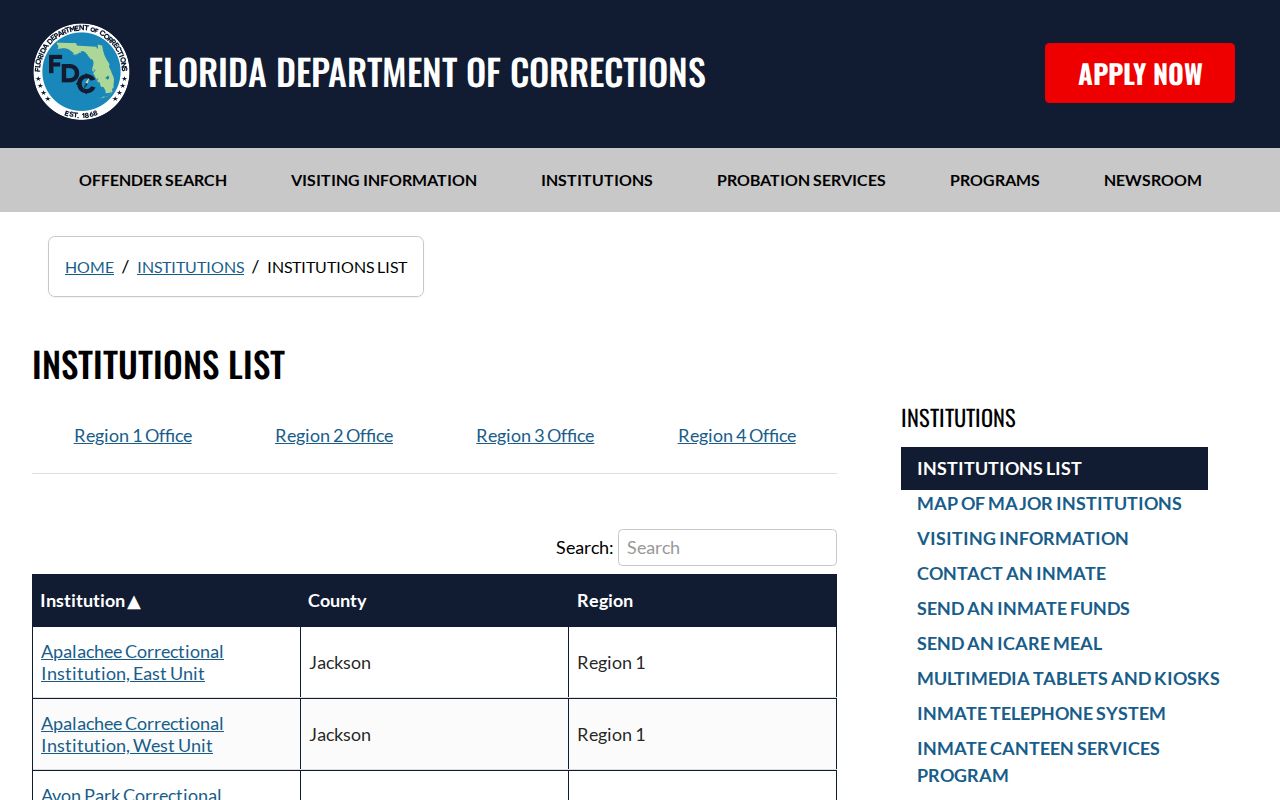
The directory supports the closure finding and redirects current questions to the statewide person record rather than an obsolete institution contact.
Contemporary reporting also placed Hendry Correctional Institution in the 2012 closure round. Historical reporting can explain why a prison name appears in an old record, but FDC controls the current institution list and offender data. Do not infer a release date from the closure year. Prisoners were moved, and each person's later path must be read from their own record.
- DC number
- The statewide FDC identifier that follows the person across institutions.
- Incarceration history
- The person-level sequence of prison admissions, locations, and out events.
- Release date
- The historical prison-exit date shown after the event.
- Discharge
- The end of an applicable sentence or supervision obligation, which may be later.
Former Hendry Record Requests
Use the FDC public-records office for formal records tied to the former institution. Give the DC number, full committed name, approximate incarceration dates, and the exact document sought. Useful requests can identify the inmate record, movement history, release date, release type, public release documentation, and photograph, subject to lawful exemptions and redaction.
FDC provides a cost estimate after exemption review. Ask for electronic delivery when suitable and keep the request narrow. For an apparent offender-search error, Bureau of Classification and Central Records is the published accuracy contact. Bureau of Admission and Release handles release questions. Neither task should be routed to the closed facility.
Florida Department of Corrections
501 South Calhoun Street
Tallahassee, FL 32399-2500
Classification and Central Records: (850) 488-9859
Bureau of Admission and Release
(850) 488-9167
dc.release@fdc.myflorida.com
Public-record assistance: (850) 717-9774
A records response can supply detail not displayed in the public network. It still must be read as a state-prison record, not a Hendry county-jail release report.
Hendry Prison Release Meaning
Leaving a state prison can lead to the community, another custodian, or FDC community supervision. An active probation, parole, or conditional-release record means the person is outside prison when the status says so but remains under legal control. A detainer can also change the destination. Preserve the exact status and do not turn prison release into a claim that every sentence or case ended.
Florida parole applies only to limited eligible sentence groups because eligibility ended for most offenses committed on or after October 1, 1983. FCOR may set or review a parole date for eligible cases, but an agenda is not proof of release. Check the final order, release plan, detainers, and the actual FDC out event.
A projected date can change because of gain-time awards or loss, sentence-credit corrections, revised sentence structure, discipline, review, or another custody interest. The historical release record is stronger after the event. If the person later entered a new county or federal custody, that separate record controls the newer status.
Hendry Facility Name Confusion
The former state prison and the active Hendry County Jail are different facilities under different agencies. The jail is operated by HCSO at the Bridge Street campus in LaBelle. Its public integration can show IN or OUT and links to VINELink. The former institution belonged to FDC and no longer operates. Current county release questions must go to HCSO.
A county impact-fee study lists the main County Jail, New Jail Building, and visitation or old-EMS building on the Bridge Street campus. Those current county assets should not be renamed as Hendry Correctional Institution. Likewise, an old FDC record should not be sent to the county jail for correction. Each custodian controls its own record.
The Hendry County release search explains the county, state, federal, and immigration handoffs. Start with the case type. A Hendry arrest begins with HCSO and the Clerk; a Florida prison sentence begins with FDC; a federal sentence uses BOP.
Former Hendry Release Trail
Build the historical trail around stable identifiers. The DC number ties the person detail to sentence records and incarceration history. The county and case number connect the prison record to the sentencing court. Admission, movement, and out dates show the state custody sequence. Supervision status can explain what followed prison release.
Do not assume the institution where someone once lived was the release facility. A move could have occurred before the out event. Copy the release-facility field when FDC provides it. If the detail does not answer the question, ask Central Records for the movement and release documentation rather than guessing from the last known prison name.
Remember: Former Hendry Correctional Institution is closed; all current person and release checks go through FDC.
Former Hendry Record Limits
FDC's release-first database includes people already released and people scheduled for release, and it updates nightly. That mixed scope matters when tracing an old Hendry institution record. A past date with an incarceration-history out event supports completed prison release. A future date remains scheduled. The active detail's Current Release Date can change through gain-time, forfeiture, restored credit, or review.
State supervision can extend the trail. If the detail links to active supervision, read the exact type, status, assigned office, and scheduled termination information. Leaving the former prison did not necessarily end FDC control. For parole-eligible cases, an FCOR agenda records scheduled action, not the result. Use a final order and later custody history.
Public display and records retention differ. A person detail may remain searchable after release, while the inmate file follows FDC retention rules and lawful limits. A missing image or field does not prove the source record was destroyed. Ask Central Records for the specified item, identify the DC number, and allow for redaction.
Old references can appear with variant spellings. Use them to narrow the incarceration period, but match the person with the DC number and committed name. The county and case number can provide another link. An institution-name match alone is not enough when names are common.
Never use the closure date as a personal release date. Research states that the population was moved when the prison closed. Each prisoner could have had a different destination and later path. Only the person-level movement and release record answers when that individual left FDC custody.
Current sources prevent name confusion. The HCSO detention page identifies the active county function, the HCSO inmate search provides current county labels, and the Hendry Clerk gateway locates local cases. None replaces FDC history, but each shows that today's county jail is not Hendry Correctional Institution.